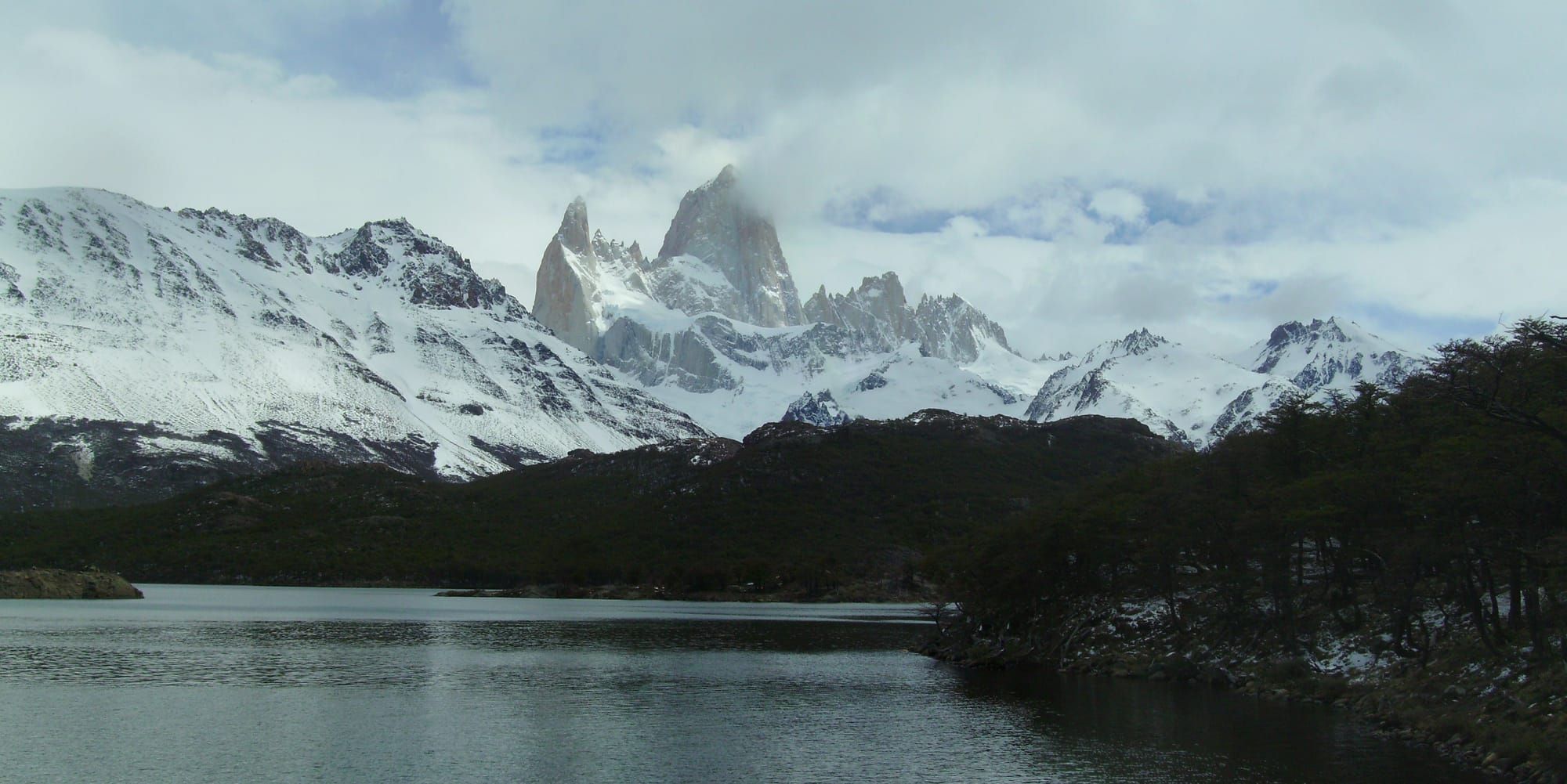
At this point coverage is wide enough you probably already know Pattie Gonia. But if you're new to this, Pattie Gonia is the stage persona of Wyn Wiley — a queer climate activist whose drag aesthetic trades heels for hiking boots. She has raised millions for the outdoors and for LGBTQ+ causes. Patagonia is now suing her. Patagonia gave itself to a climate trust and says its only shareholder is Earth. The lawsuit feels like a betrayal.
But feeling like a betrayal doesn't actually make it one. This is a trademark case, and once you see how trademark law actually works, the hard part is that Pattie is probably going to lose the piece that matters — and would lose against almost any company's lawyers, ally or not. That's worth understanding even if you think Patagonia should have let it go. Here's why, and what you can take from it. The best way to tell the trademark story starts with a dog's squeaky toy.
A squeaky dog toy explains most of this
A company sold a rubber chew toy shaped like a bottle of Jack Daniel's, relabeled "Bad Spaniels," turning the whiskey's "Old No. 7" into a joke about "Old No. 2" on your carpet. It's a poop gag. It's obviously a gag. Nobody thinks Jack Daniel's makes dog toys.
The chew-toy maker still lost.
For years, using someone's brand name in an expressive way — a film title, a song, a sketch — could get a lawsuit thrown out early under a rule called the Rogers test: a 1989 Second Circuit decision later adopted by the Ninth Circuit, the court that covers this California case. The joke didn't have to be good. It just had to be a real creative use that wasn't lying about who made it. Parody was safe in that space.
In Jack Daniel's v. VIP Products (2023), the Supreme Court drew a line. The Rogers protection falls away in one situation: when you use the joke as your own brand name, to sell your own product. "Bad Spaniels" wasn't a punchline in a sketch — it was the name on the thing in the store. And the moment a parody becomes the label on merchandise, the early exit is gone. You have to answer the question any seller answers: are people likely to be confused about who's behind it?
Parody isn't a defense in a trademark case. It can make confusion less likely (something that matters a lot in trademark cases). A clear parody tells you it isn't the real brand. But it isn't a shield. Pattie Gonia could be pitch-perfect performance art (and it is, which is what makes this hard for people) and it still wouldn't fix the problem with selling Pattie Gonia merchandise. Performing under the name? Sure. And even Patagonia appeared fine with that, per their complaint. Trying to sell similar goods and services under a name that sounds like Patagonia's — close enough that buyers think the two are the same or affiliated? That's a problem in trademark-land.
What Patagonia is suing over
Read the complaint and one thing stands out: Patagonia is not trying to take the persona away.
The performances, the activism, the character herself — those are mostly left alone, and Patagonia says outright that it admires the work. What it sues over is narrower: a store, pattiegoniamerch.com, selling "Pattie Gonia Hiking Club" shirts at $48 a piece, and a September 2025 application to register PATTIE GONIA as a brand across five categories — including clothing, marketing, and entertainment (Serial No. 99/404,728).
That application is the heart of it. You can't tell the federal government "this is the brand I sell clothes under" and tell a judge "it's only commentary." Filing to register the name is the clearest sign there is that you're using it as a brand — the exact thing Jack Daniel's says ends the parody shortcut. And here's the comparison that should worry her side: the Bad Spaniels toy was a sharper, more obvious parody than a hoodie that reads PATTIE GONIA HIKING CLUB. The toy didn't get out early. Neither will the merch.
This didn't come out of nowhere
It can feel like Patagonia ambushed a friend. The record is more uncomfortable than that: it was coming for years, and Pattie was told.
Patagonia goes after PATAGONIA look-alikes regardless of who's behind them — the complaint lists past targets like FRATAGONIA, PETROGONIA, and PETAGONIA, running from frat humor to an oil-industry riff. That even-handedness is the point: a famous brand that only enforces against people it dislikes can lose its protection altogether. So when Patagonia saw an ally start selling product under a sound-alike name, the law more or less pushed it to respond the way it responds to anyone.
And it didn't spring the lawsuit cold. The complaint includes 2022 emails — back when Pattie was working with Hydro Flask — asking her to keep Patagonia's logo, font, and name off product, with follow-ups in 2025 after the store launched. Pattie's team remembers those talks differently, and the answer admits the emails happened while disputing what they meant. A court will work that out. But "nobody warned me" isn't really on the table.
Pattie Gonia should have taken that early 2022 email as a warning that she probably won't be able to do as much with this branding choice as she might like. They wouldn't stop her from being a drag performance artist, but the expansion into other product lines that a growing brand naturally wants would be off the table. Choosing to press forward after that was a huge mistake with predictable consequences.
The logo use is also hard to defend
Patagonia still has to prove that people are likely to be confused. The complaint says they already are — and that Pattie spent years making it easy.
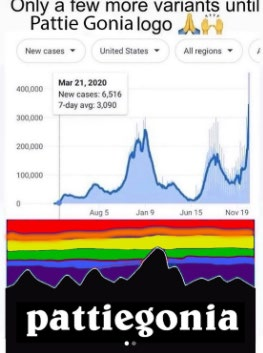
The pattern runs through the exhibits. The complaint points to a "pattiegonia" mashup that sets her name inside Patagonia's rainbow-and-mountain logo, in Patagonia's own font; to what it calls a P-6 replica on the gloves she wore in her October 2025 post marking a million followers; and to another on the outfit she wore to an Out event that November. In a TED talk she told the room they were wearing "my merch," then added that "Patagonia vests are indeed very TED drag." A single pun on a name is easy to defend. A name, a font, a mountain, and a running wink that the two brands belong together is harder to wave off — it reads less like riffing on Patagonia than like merging with it.
And it worked, which is the part that should worry her side. The complaint quotes real people reacting to Pattie's posts: one "genuinely thought this was a Patagonia ad"; others praised Patagonia by name, for its quality and for protecting public lands, plainly believing the posts were the company's own. In a trademark case, that's gold for the plaintiff. The two most damaging things you can show are that a defendant set out to evoke your brand and that real customers were actually confused — and the complaint has both, in consumers' own words.
Wiley's lawyers know it. Their April 2026 answer admits she wore the outfit, made the post, and said those words at TED, but denies the logo was a copy — and Pattie's camp has long called the logo mashups fan art she never sold. That may hold for the memes. It's harder for the glove and the outfit she wore herself, and it doesn't explain the confused buyers. "Never used their logo," Wiley's public line, has to live alongside exhibits showing the mountain on her own hands and consumers who thought they were looking at Patagonia all along.
Don't use someone else's branding to sell products
It's a bad idea to build a brand piggybacking off someone else's goodwill. Patagonia has decades of brand building. They are famous. Make a one-off character that kind of lampoons that and you're OK. Try to build a stand-alone brand that sells similar goods and services after you used their brand to elevate your own and you're going to get sued.
A clever name that plays off a famous brand is yours to use — as a parody, a character, a piece of commentary. That space is real, and it's protected. What changes everything is turning that into a product line that competes with the brand you're riffing on. At that point, in the eyes of the law, you've stopped commenting and started selling, and admiration for the other company doesn't move the needle. Patagonia would owe a friend the same response it owes a stranger — which is, in an odd way, the fairest thing about this.
That doesn't erase what Pattie Gonia built, and it doesn't make the timing — a lawsuit in a brutal stretch for queer people — feel any better. Both sides seem to know it. Patagonia says it isn't challenging anyone's identity; Wiley has offered to drop the application and stop copying the logo if Patagonia walks away. A deal that keeps the persona, drops the application, and reins in the merch is the likely ending, and probably the right one.
The dollar was always symbolic. The point was never to take a dollar from Pattie Gonia. It was to keep PATTIE GONIA from becoming a brand on the same shelf.
Table of Authorities
Primary sources
- Complaint, Patagonia, Inc. v. Entrepreneur Enterprises, Inc. dba Pattie Gonia Productions and Wyn Wiley, No. 2:26-cv-00586-RGK-RAO (C.D. Cal. filed Jan. 21, 2026) (Klausner, J.; Oliver, M.J.). Docket and complaint on CourtListener.
- Defendants' Answer to Complaint with Jury Demand, Doc. 19 (C.D. Cal. filed Apr. 29, 2026) (Baker & Hostetler LLP for defendants; twelve affirmative defenses, including laches/acquiescence and First Amendment/Rogers; admits the merch store and the application, denies the copied logo). Read on RECAP.
- U.S. Trademark Application Serial No. 99/404,728 (PATTIE GONIA), filed Sept. 21, 2025 (Classes 009, 016, 025, 035, 041). Status on USPTO TSDR.
Statutes
- Lanham Act § 32, 15 U.S.C. § 1114 (infringement of a registered mark).
- Lanham Act § 43(a), 15 U.S.C. § 1125(a) (false designation of origin / unfair competition).
- Lanham Act § 43(c), 15 U.S.C. § 1125(c) (dilution of a famous mark).
Cases
- Jack Daniel's Properties, Inc. v. VIP Products LLC, 599 U.S. 140 (2023). Oyez.
- Rogers v. Grimaldi, 875 F.2d 994 (2d Cir. 1989). Justia.
Secondary sources
- Patagonia, "Protecting Our Brand: Update on Trademark Activity" (Patagonia Works, Jan. 21, 2026).
- WWD, "Drag Queen Pattie Gonia Calls Out Patagonia Over Trademark Lawsuit" (May 2026).
- Outside, "'One of Us Profoundly Misunderstood the Assignment.' Pattie Gonia Breaks Silence on Patagonia Lawsuit" (May 27, 2026).
Legalish is supported by Lynch LLP — Trademark · Copyright · Patents


