To reveal art and conceal the artist is art's aim.— Oscar Wilde, Preface to The Picture of Dorian Gray
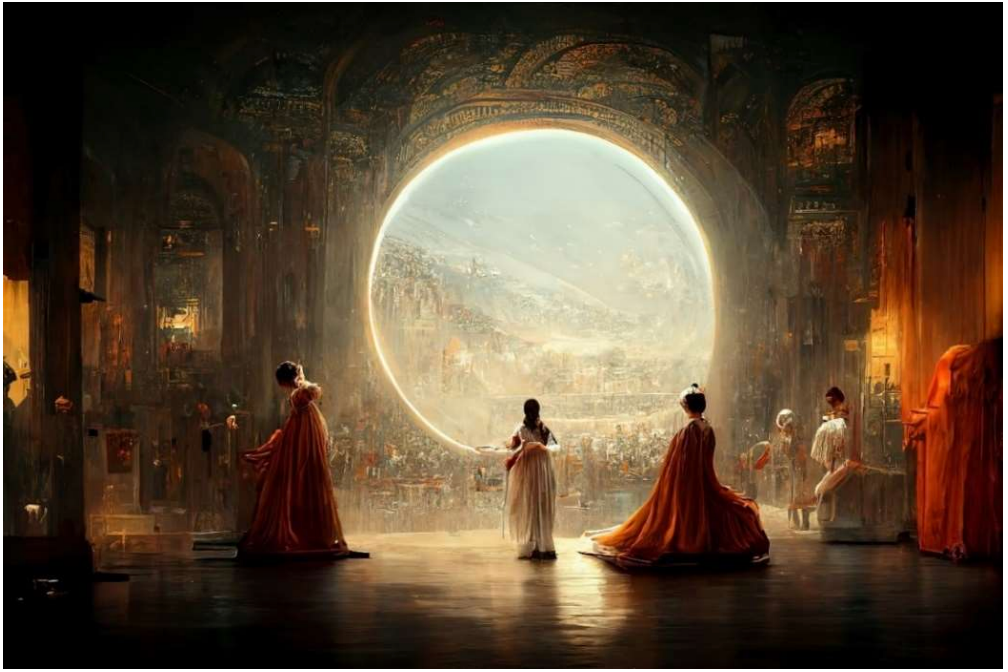
In 2022, Jason Allen entered a digital image called Théâtre D'opéra Spatial in the Colorado State Fair's art competition and won first place in its category. Then he tried to register the copyright, and a different contest began — one he has been losing for three and a half years.
The Copyright Office refused him. His first request for reconsideration: refused. His second, before the Review Board: refused. He sued. The cross-motions for summary judgment are now fully briefed and sitting with a federal judge in Denver, who could rule any day.
Allen's argument is that he is the author, and that the Office invented a rule to say otherwise. He conceived the image, specified its subject, genre, tone, color, composition, lighting, and era, and ran at least 624 prompts through Midjourney — refining, discarding, re-steering — until the output matched the picture in his head, then finished it by hand in Photoshop. Midjourney, on his telling, is a tool no different in kind from a camera: a machine that turns a human's creative choices into a fixed image. The standard the Office used to deny him — that he failed to supply the "traditional elements of authorship" — appears, he says, nowhere in the Copyright Act, the Constitution, or any court's opinion, and it unlawfully polices how he made the work rather than whether he made creative choices at all. The reason any of this matters beyond one picture is what the Office's contrary rule implies. As Allen's brief puts it: if his involvement isn't enough, "it is unclear who, if anyone, could copyright a work they created using AI."
It is the same picture throughout. The only question is whether Allen made it.
Nobody home, nobody owns it
You can't register a copyright if you list an AI tool as the author. That's about as basic as it gets, and to my mind it's intuitive.
Stephen Thaler asked the Office to register a picture and named his AI system as the sole author — no human in the loop, by his own admission. Every level said no, and in March 2026 the Supreme Court denied certiorari, leaving the human-authorship rule standing. Pure machine output, no human author, nothing to own. That rule is as close to welded in place as it gets without a written SCOTUS opinion.
Allen is the next question up, and a more interesting one. I think he's right, and the reason is that copyright has never asked an author to execute every detail of a work — only to make the creative choices that give it its character. He's a human. He sat at the keyboard. He conceived the image and made the choices that define it: subject, composition, tone, color, lighting, style, era. He did the prompting, the picking, the editing.
That those choices ran through a model doesn't change what they are. If I make a digital drawing on an iPad, I don't lose my copyright because the device picked the exact hue of orange that renders best on the screen. A photographer doesn't forfeit a copyright because the camera, not the photographer, resolved the focus, the grain, and every leaf on the tree in the background. The law has protected photographers since the 1880s precisely because authorship lives in the conception and arrangement, not in the machinery that fixes it to a surface. Allen made those same kinds of choices. He just made them with a newer machine.
His case asks whether a person who uses a generative model as a tool is the author of what comes out — and the Office's answer, so far, is no.
Let's travel through time to 1965
The standard the Office used to deny Allen — that he did not perform the "traditional elements of authorship" — appears nowhere in the Copyright Act, nowhere in the Constitution, and no court has ever adopted it. It traces to a single sentence in then-Register Abraham Kaminstein's annual report for fiscal year 1965, musing about whether a computer was "merely being an assisting instrument" or had itself conceived the work.
A practice manual is not a statute. And after Loper Bright Enterprises v. Raimondo (2024) killed Chevron deference, a court reviewing what "author" means owes the Office exactly none. The Office knows it; its brief tries to recast the dispute as merely applying "a settled standard" to a record, which would buy back deferential review. Allen's reply calls that what it is — an agency trying to insulate a policy choice from the independent judgment courts are now required to exercise.
Even more time travel: what Napoleon Sarony, a camera, and Oscar Wilde have to say about AI
The cleanest way to see the problem is the case the Office itself keeps citing: Burrow-Giles Lithographic Co. v. Sarony (1884), the photograph of Oscar Wilde.
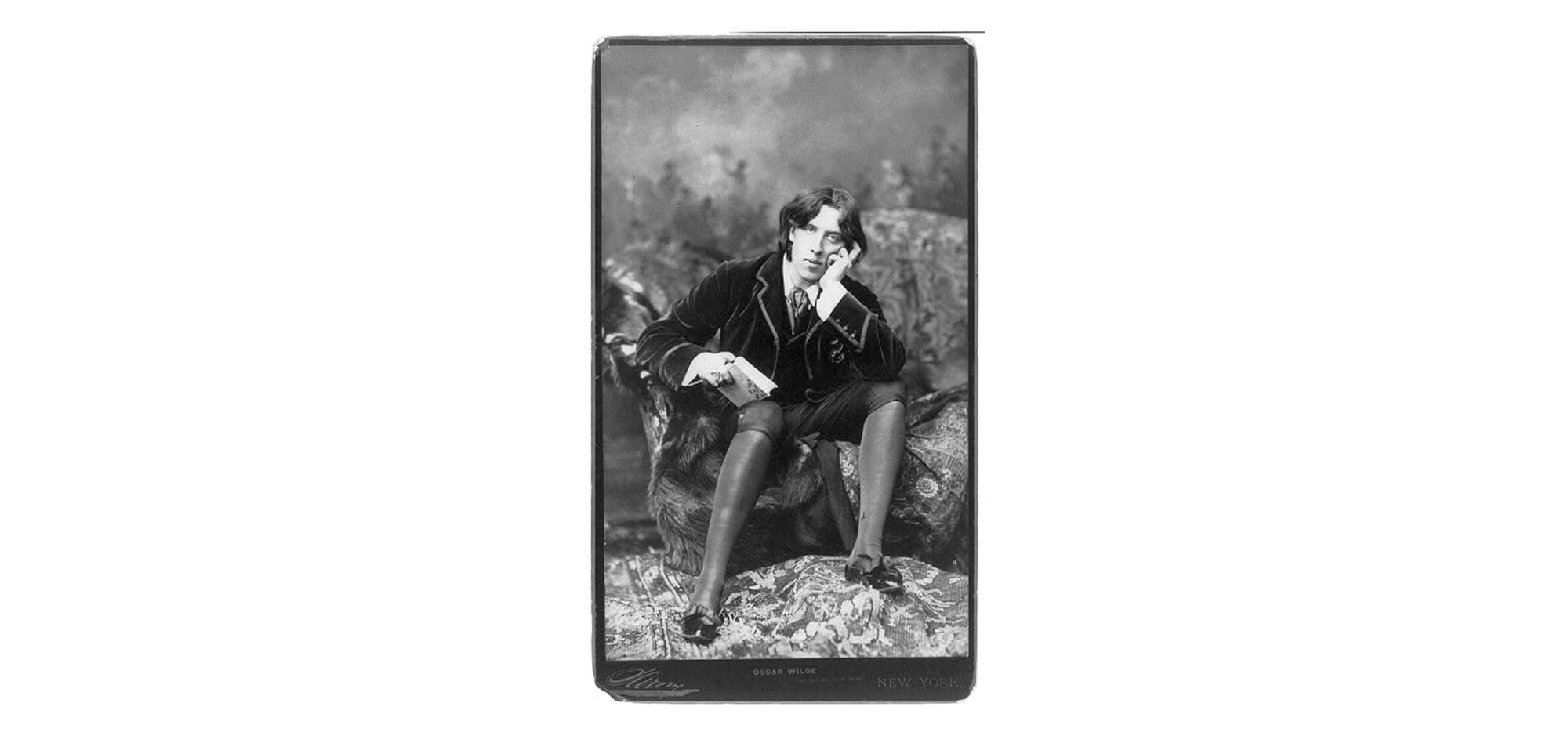
Sarony did not press the shutter. He may not have touched the camera at all. The defendant argued a photograph was therefore "merely mechanical" — the output of a machine, not a writing of any author. The Supreme Court disagreed, and located Sarony's authorship not in the physical act but in the conception: posing Wilde, arranging the costume and the light, choosing the composition. Sarony is a case where the legally recognized author never touched the device, because a machine and a machine operator stood between his creative choices and the fixed image.
Pull that thread and the Office's position starts to unravel, because the camera is a machine that fills in nearly everything the photographer doesn't specify — focus, grain, the exact rendering of every pixel. Randomness has never been disqualifying. The Second Circuit held in Alfred Bell v. Catalda Fine Arts (1951) that even a variation introduced by a slip of the hand or "a clap of thunder" can be adopted by the artist and protected. Courts protect the wildlife photographer who got lucky with timing, the news shooter who happened to be standing in the right place (Mannion; Cruz). If "I didn't control every element" defeated authorship, half the photographs ever registered would fall.
The Office knows this case, of course, and doesn't run from it. Its answer comes from Meshwerks v. Toyota — a Tenth Circuit opinion by then-Judge Gorsuch, binding in the Denver court where Allen's case sits. Sarony, the Office argues, set no per se rule that photographs are copyrightable; it protected Sarony's photo only "to the extent" it reflected his "decisions regarding pose, positioning, background, lighting, shading, and the like." And nothing in Allen's prompting, the Office says, was equivalent to posing Wilde or arranging the costume and the light. Same conception-versus-mechanism line you'd draw for Allen — turned around to put him on the wrong side of it.
So the obvious question, and the one the Office has to answer: why does iterating 624 prompts toward a specific vision give you less than being in the right place when the shutter clicks?
The government's real argument is better than the headlines
The "feds deny AI art" framing makes the Office sound foolish. Its brief is not foolish. Its actual argument is narrower and stronger.
The Office isn't saying randomness is the bar. It's saying randomness is the evidence — proof of how much of the expression came from Midjourney rather than from Allen. Run one prompt for a "celadon owl pitcher" and you get twelve completely different pitchers; ask for an elderly woman on a Star Trek bridge and the model returns a generic sci-fi scene with neither an elderly woman nor anything from Star Trek. Where the prompt is silent, the machine fills the gap — and the gap, the Office argues, is most of the picture. Prompts are ideas; copyright protects expression, not ideas. Quoting the Court's own definition of an author as "the person who translates an idea into a fixed, tangible expression," the Office's line is that conceiving and approving is not the same as executing. Effort doesn't change it. Six hundred prompts of effort still leaves the executing to Midjourney.
And the Office has a clean fallback: it grants thousands of registrations for AI-assisted work. It offered to register Allen's human contributions — the Photoshop edits — if he would just disclaim the raw Midjourney output. He refused.
Not all of Allen's facts are backboard-shattering dunks of copyright greatness
He does not disclose the actual prompt. He called revealing it the equivalent of "explaining a magic trick." The Office said, fairly, that it couldn't measure the gap between his input and the output because he wouldn't show the input. You cannot simultaneously claim total creative control over the expression and hide the only thing that would prove it.
And the all-or-nothing posture is a choice, not a trap. Allen could hold a registration on his edited layer today. He turned it down to litigate for the whole work — the same maximalist swing Thaler took, run by the same lawyer, Ryan Abbott, whose Artificial Inventor Project lost the Thaler vehicle and is now running this one. These are test cases, picked to draw the brightest possible line. That's legitimate. It also means the facts were engineered for a fight, not for Allen's odds of walking away with a certificate.
None of which decides the law. The Supreme Court builds doctrine on engineered records all the time. In 303 Creative, it announced a major First Amendment rule for a web designer who had never made a wedding website and had never been asked to make one for a same-sex couple — and the lone "customer" in the file, a man named Stewart, turned out to be a married straight stranger who says he never sent the request and only learned his name was in a Supreme Court filing when a reporter called. The Court didn't care; it never mentioned him.
Allen's facts here are messy, and it would be nice to have the prompts in the record. (I'd genuinely like to see them.) But the legal question — is a human who directs a generative tool the author of what comes out — shouldn't shrink because one exhibit is missing. The government doesn't get to deny you a copyright because you won't narrate your own creative process. If the Office wants that kind of disclosure, it has to put it in a regulation or get Congress to write it into the statute. It did neither. It invented the demand and ran it at Allen. And absent a real rule, the fix comes from a court — one like the one now weighing his case in Denver.
What a win actually looks like if you're an artist using AI
Strip away the noise and the case is close on the law and lopsided on the equities. Allen has the better statutory argument — the Office's test is extra-statutory, undefined, and inconsistently applied, and Loper Bright means no court has to take the Office's word for it. The Office has the better record — a litigant who hid his prompt and turned down a partial registration to swing for the whole work.
But here's the part that matters if you're the artist watching this rather than the lawyer arguing it: even a total Allen win doesn't hand you a copyright in whatever the model spits out. It can't — Thaler already welded that in place. What an Allen win does is narrower and more useful. It kills the rule that says your prompts can never count toward authorship, and strikes the "traditional elements" test the Office has used to wave away human direction. It clears a roadblock. It doesn't deed you the output.
And even Allen doesn't walk away with a registration. He concedes a remand is the likely remedy — the court strikes the test and sends his application back to the Office to decide again under a correct standard. "Allen wins" means the 1965 sentence finally gets tested in court, not that Théâtre D'opéra Spatial gets a registration number.
So what do you actually do in the meantime, if you make things with these tools? The same thing the Office has been telling people all along: register the parts that are unmistakably yours. It grants thousands of registrations for AI-assisted work every year. Your selection, your arrangement, your edits, your human-authored contributions are protectable today — you disclaim the raw machine layer and claim what you built on top of it. It's a thinner copyright than Allen wants, but it exists right now, and it doesn't depend on a sympathetic judge in Denver. Allen is litigating for the ceiling. The floor under your feet already holds weight.
One last thing worth watching, because it shows how thin the ice is under all of this. The Register of Copyrights defending the human-authorship line, Shira Perlmutter, is right now fighting to keep her own job. The administration fired her in May 2025 — the day after her Office released a report questioning whether companies can train AI on copyrighted work without a license — and a federal appeals court has since reinstated her, calling the firing likely unlawful. The Supreme Court is sitting on the government's request to remove her, parked behind its other removal-power cases. The office drawing the line on AI authorship can't say for certain who gets to run it.
The machine, meanwhile, keeps painting. We still can't agree on whether anyone's holding the brush.
Table of Authorities
Primary sources
- Plaintiff's Motion for Summary Judgment, Allen v. Perlmutter, No. 1:24-cv-02665-WJM (D. Colo. Aug. 25, 2025), ECF No. 41. Docket on CourtListener.
- Defendants' Response and Cross-Motion for Summary Judgment, ECF No. 57 (D. Colo. Jan. 16, 2026); corrected brief at ECF No. 58-1 (Feb. 6, 2026). RECAP PDF.
- Plaintiff's Reply in Support of Motion for Summary Judgment, ECF No. 60 (D. Colo. Feb. 27, 2026). RECAP PDF.
- Brief of Amicus Curiae Prof. Edward Lee in Support of Plaintiff, ECF No. 47 (D. Colo. Sept. 3, 2025). RECAP PDF.
- U.S. Copyright Office Review Board, Second Request for Reconsideration for Refusal to Register Théâtre D'opéra Spatial (Sept. 5, 2023). PDF.
Statutes
- 17 U.S.C. § 102(a) (subject matter of copyright); §§ 408–410 (registration and refusal). Cornell LII (§ 102).
- Administrative Procedure Act, 5 U.S.C. §§ 701, 706 (scope and standard of review). Cornell LII (§ 706).
Cases
- Thaler v. Perlmutter, 130 F.4th 1039 (D.C. Cir. 2025), cert. denied, No. 25-449 (U.S. Mar. 2, 2026). D.C. Circuit opinion.
- Burrow-Giles Lithographic Co. v. Sarony, 111 U.S. 53 (1884). Justia.
- Meshwerks, Inc. v. Toyota Motor Sales U.S.A., Inc., 528 F.3d 1258 (10th Cir. 2008). CourtListener.
- Alfred Bell & Co. v. Catalda Fine Arts, Inc., 191 F.2d 99 (2d Cir. 1951). CourtListener.
- Mannion v. Coors Brewing Co., 377 F. Supp. 2d 444 (S.D.N.Y. 2005). CourtListener.
- Cruz v. Cox Media Grp., LLC, 444 F. Supp. 3d 457 (E.D.N.Y. 2020). vLex.
- Community for Creative Non-Violence v. Reid, 490 U.S. 730 (1989). Justia.
- Feist Publications, Inc. v. Rural Telephone Service Co., 499 U.S. 340 (1991). Justia.
- Loper Bright Enterprises v. Raimondo, 603 U.S. 369 (2024). Justia.
- 303 Creative LLC v. Elenis, 600 U.S. 570 (2023). Justia.
Secondary and agency sources
- U.S. Copyright Office, Copyright and Artificial Intelligence, Part 2: Copyrightability (Jan. 2025). PDF.
- U.S. Copyright Office, Sixty-Eighth Annual Report of the Register of Copyrights for the Fiscal Year Ending June 30, 1965, at 5 (1966) (origin of "traditional elements of authorship"). PDF.
- Perlmutter removal litigation — Perlmutter v. Blanche, No. 25-5285 (D.C. Cir. Sept. 10, 2025) (injunction pending appeal reinstating the Register); stay application Blanche v. Perlmutter, No. 25A478 (U.S.) (deferred Nov. 28, 2025 pending Trump v. Slaughter and Trump v. Cook). D.C. Circuit order.
Legalish is supported by Lynch LLP — Trademark · Copyright · Patents


